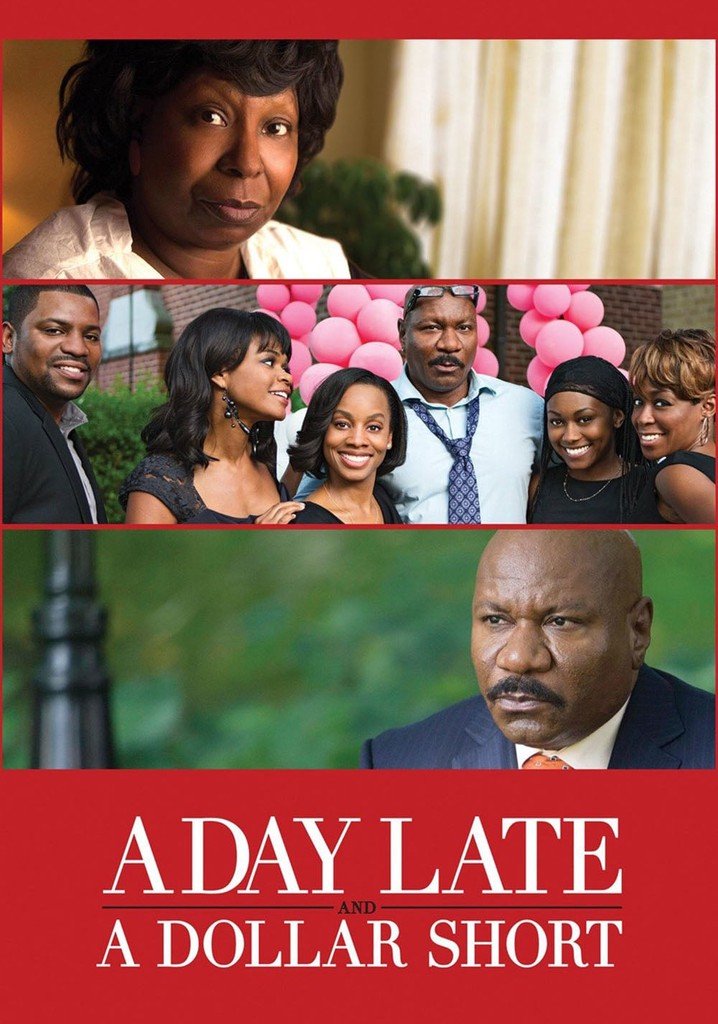
Terry McMillan's A Day Late and a Dollar Short, brought to vivid life in the 2014 Lifetime television movie, is far more than a simple plot summary; it’s a raw, unflinching exploration of family, dysfunction, and the enduring power of love. If you're looking to understand the full sweep of the A Day Late and a Dollar Short Movie Plot Summary, prepare for a journey into the heart of a large, vibrant, and deeply flawed African-American family grappling with the messy realities of life, addiction, betrayal, and, ultimately, hope. This isn't just a story; it's a mirror reflecting universal truths about what it means to belong, to hurt, and to heal.
At a Glance: The Heart of the Price Family Saga
- Who: The Price family – matriarch Viola, husband Cecil, and their four adult children: Paris, Lewis, Charlotte, and Janelle.
- Where: Set primarily in Las Vegas, Nevada, in the mid-1990s.
- What: A sprawling family drama addressing contemporary issues like addiction, alcoholism, infidelity, molestation, divorce, and the complexities of sibling and marital bonds.
- The Catalyst: Viola's deteriorating health, her impending divorce, and ultimately, her death, which forces her fractured family to confront their truths.
- The Core Conflict: Deep-seated resentments, unspoken traumas, and individual struggles threaten to tear the Price family apart, until a shared loss provides an unexpected path toward reconciliation.
- The Resolution: A poignant Thanksgiving gathering where Viola's pre-written letters spur emotional revelations, forgiveness, and a renewed commitment to family unity and personal growth.
The Weight of Inheritance: An Overview of the Price Family Saga
Every family has its secrets, its unspoken rules, its simmering resentments, and its fierce loyalties. For the Price family of Las Vegas, these elements are magnified, creating a tapestry of love and chaos that forms the vibrant backdrop of A Day Late and a Dollar Short. Based on Terry McMillan's compelling 2002 novel, the 2014 Lifetime movie adaptation plunges viewers into the lives of a family struggling under the weight of intergenerational issues, personal demons, and the ever-present question of whether their bonds are strong enough to withstand the truth.
At its core, the narrative is a multi-perspective family drama, seen through the eyes of matriarch Viola and her four adult children. It’s a story about the messy, complicated, and often painful reality of family life, particularly when societal pressures, individual choices, and past traumas collide. The movie doesn't shy away from uncomfortable topics; it confronts them head-on, presenting a raw and authentic portrayal of a damaged family learning to pick up the pieces and, perhaps, come together.
The Matriarch's Legacy: Viola Price's Fateful Hand
Central to the entire narrative is Viola Price (Mama), the 55-year-old matriarch who, despite her own struggles, tries to hold her sprawling family together. Viola is a force of nature, sharply observing her children and categorizing them with animal metaphors: Paris the lion, Lewis the horse, Charlotte the bull, and Janelle the sheep. Her strained 38-year marriage to Cecil Price forms the foundation of the family's instability. She grapples with her own health issues, frequently hospitalized for asthma, a condition that foreshadows her eventual fate.
Life takes a series of dramatic turns for Viola. She experiences a fleeting moment of joy, winning a significant amount at a horse race, a victory that feels almost ironic given the storm brewing in her personal life. Shortly after, she receives divorce papers from Cecil, a crushing blow that highlights the deep fissures in her long-standing relationship. This period of intense personal turmoil culminates in a fatal asthma attack, a tragic event that serves as the ultimate catalyst for the Price family's reckoning.
Before her death, however, Viola, with a wisdom born of experience and foresight, pens individual letters to each of her children. These letters, intended to be read at Thanksgiving, are her final, desperate attempt to guide her fragmented family toward unity, understanding, and forgiveness. Her legacy isn't just her children; it's the difficult, vital conversations she posthumously initiates.
Cecil's Second Act: Guilt, Growth, and a New Beginning
While Viola grapples with her end, her husband Cecil Price is attempting to navigate a new beginning. A hardworking man, Cecil makes the difficult decision to leave Viola, seeking a different life with Brenda, a younger woman who later becomes pregnant with his child. Brenda brings her own three young children—Miss Q, Hakeem, and Sunshine—into Cecil's life, creating an instant, bustling new family unit.
Cecil's journey is one of self-discovery and a slow-burning guilt. He confronts his own demons, achieving sobriety and planning to open a barbecue restaurant, a symbol of his desire for a stable, productive future. Yet, despite these positive changes, he struggles deeply with the estrangement from his adult children. His decision to leave Viola has created a chasm, and he yearns for reconciliation, even as he embraces his new responsibilities and the prospect of fatherhood again. His arc speaks to the possibility of change and the enduring longing for family connection, even when one has initiated the separation.
The Children's Crossroads: Individual Battles, Collective Pain
Viola and Cecil's children are, as Viola observed, distinct personalities, each battling their own demons and contributing to the complex tapestry of the Price family. Their individual struggles are the heart of the movie’s intricate plot.
Paris: The Lioness's Secret Burden
Paris, the eldest sibling, embodies strength and ambition. A divorced caterer with dreams of publishing her own cookbook, she projects an image of competence and control. However, beneath this veneer lies a secret struggle: a debilitating prescription drug addiction, primarily Vicodin. Her addiction impacts every aspect of her life, including her relationship with her nearly 17-year-old son, Dingus, a budding athlete. When Dingus’s girlfriend, Jade, has a pregnancy scare, it adds another layer of stress to Paris’s already precarious world, forcing her to confront the potential consequences of her choices.
Paris's journey in the film is about breaking free from the chains of addiction. She bravely decides to tackle her dependency head-on, initiating withdrawal at a luxury spa, a significant step toward reclaiming her life and seeking honest, authentic connections, free from the haze of medication.
Lewis: The Prodigal Son's Rocky Road to Redemption
Lewis is introduced as the family "screw-up," a man perpetually entangled in legal troubles, battling alcoholism, and suffering from early onset arthritis. His past is haunted by the trauma of childhood sexual abuse, a wound that clearly informs his present struggles. Despite his many setbacks, Lewis possesses a fierce love for his son, Jamil. He desperately attempts to rebuild his life and, crucially, protect Jamil from his abusive stepfather, Todd.
This protective instinct leads to a violent confrontation where Lewis punches Todd, resulting in his arrest for assault and battery. It's while in jail, in a moment of utter despair, that Lewis receives the devastating news of his mother's death. This profound loss becomes a turning point. Lewis resolves to achieve sobriety and regain his dignity, driven by the desire to be a stable, loving father figure for Jamil and to honor his mother's memory. His story is a testament to resilience and the profound impact of rock bottom.
Charlotte: The Bull's Bruised Heart and Burgeoning Independence
Charlotte, often feeling alienated within the family, carries a heavy burden of financial woes and a strained marriage to Al. Her husband, Al, has a history of infidelity, including a secret child, Raynathan, with another woman named Alice. This betrayal casts a long shadow over Charlotte's life, contributing to her feelings of isolation and resentment. Adding to her personal challenges, she discovers her son, Trevor, is gay, prompting her to grapple with her own prejudices and fears while striving to support her child.
In a stroke of luck that seems almost too good to be true, Charlotte wins a significant lottery sum, offering a potential escape from her financial anxieties. However, the money alone cannot heal her emotional wounds. Following her mother's death, Charlotte seeks therapy, a vital step toward processing her grief and understanding the complex, often toxic, dynamics within her family. This path leads her to a pivotal decision: to divorce Al and embark on a journey of self-discovery and independence.
Janelle: The Sheep's Awakening to Unspeakable Betrayal
The youngest sibling, Janelle, appears outwardly submissive, hence Viola's "sheep" metaphor. She struggles to raise her teenage daughter, Shanice, and is pregnant with her partner George's child, seemingly building a new family. However, Janelle's world is shattered by a horrifying discovery: George has been molesting Shanice since she was seven years old. This revelation is a devastating blow, exposing the darkest corners of human cruelty within her own home.
In a moment of righteous fury and pain, Janelle strikes George, her quiet exterior giving way to a fierce resolve. She vows to report him to Child Protective Services, prioritizing her daughter's safety and well-being above all else. Seeking guidance in a moment of crisis, she consults a tarot card reader, perhaps hoping for a glimpse of a better future. As she explores new opportunities for herself and Shanice, she is then dealt another crushing blow by the news of her mother's death, compounding her grief and forcing her to confront her future without her mother's direct guidance.
Supporting Players: The Ripple Effect on Relationships
The Price family saga isn't just about the core members; it’s also about the individuals whose lives intersect with theirs, creating further complications and catalysts for change.
- Brenda: Cecil's new partner, who becomes pregnant with his child, represents Cecil's attempt at a fresh start and a different kind of family. Her presence initially creates friction but ultimately highlights Cecil's commitment to building a stable life.
- Jamil: Lewis's son, caught in the crosshairs of an abusive stepfather, Todd. Jamil's desire to live with Lewis is a driving force behind Lewis's efforts to clean up his act and protect his son.
- Shanice: Janelle's teenage daughter, a victim of George's molestation. Her trauma is a stark reminder of the hidden darkness that can exist even within seemingly stable homes and becomes the catalyst for Janelle's profound awakening and fight for justice.
- Dingus: Paris's son, nearly 17, an athlete. His girlfriend Jade's pregnancy scare forces Paris to confront her own responsibilities and the potential impact of her addiction on her family's future.
- Trevor: Charlotte's son, whose coming out as gay challenges Charlotte's preconceptions and ultimately strengthens their bond as she learns to accept and support him unconditionally.
- Raynathan: Al's secret child with Alice, a stark symbol of Al's infidelity and Charlotte's past pain, contributing to her decision to seek independence.
These characters are not mere footnotes; their experiences are intrinsically woven into the main characters' arcs, intensifying their struggles and pushing them toward necessary change.
The Unraveling and the Re-Stitching: How Trauma Shapes a Family
The A Day Late and a Dollar Short Movie Plot Summary is a masterclass in portraying the insidious nature of unresolved trauma and the long-term impact of dysfunctional family dynamics. The film unflinchingly tackles a litany of challenging contemporary issues:
- Prescription drug addiction: Paris's secret battle highlights the hidden struggles many face.
- Alcoholism: Lewis's constant struggle underscores the devastating cycle of addiction.
- Incest and Molestation: Janelle and Shanice's storyline exposes the horrific reality of familial abuse and its profound impact.
- Homosexuality: Trevor's journey to self-acceptance and his mother's evolving understanding explore themes of identity and familial acceptance.
- Single Parenthood: Janelle's struggles reflect the immense pressures faced by many single mothers.
- Divorce and Infidelity: Viola and Cecil's separation, and Al's betrayals, illustrate the pain and complexity of marital breakdowns.
Each character's individual battle contributes to the perceived "dysfunction" of the Price family. These aren't isolated incidents but rather interconnected threads, pulling the family further apart. The narrative doesn't offer easy answers; instead, it portrays the messy, often painful process of how trauma, both personal and shared, damages a family, leaving them vulnerable and fractured. Yet, it also suggests that through honesty and confrontation, there's a possibility for re-stitching, for finding new ways to connect and support each other.
Viola's Last Gift: The Thanksgiving Reckoning
The true turning point in A Day Late and a Dollar Short arrives with Viola’s death. It’s a tragic event, yet it serves as the ultimate catalyst, forcing the estranged Price family to come together for Thanksgiving. This gathering, initially steeped in grief and lingering resentments, becomes the stage for the family’s most profound moments of truth and reconciliation.
Viola's pre-written letters, a final act of maternal guidance, are read aloud. These aren't just sentimental messages; they are sharp, insightful observations, urging her children toward forgiveness, support, and a deeper understanding of one another. The letters spark a cascade of emotional revelations:
- Paris, moved by her mother's words and the raw emotion of the moment, confesses her prescription drug addiction to her siblings. This act of vulnerability is a monumental step in her healing journey, allowing her to lean on her family for support.
- Charlotte, through her grief and the insight gained in therapy, realizes that much of her anger was misdirected. She begins to understand the complexities of her family members' struggles and her own role within the family dynamic.
This Thanksgiving gathering transforms from a somber obligation into a powerful space for shared grief, confession, and, crucially, a collective commitment to healing. The letters don't magically solve everything, but they provide the framework, the permission, for the family to begin the arduous, yet necessary, work of mending their fractured bonds.
Picking Up the Pieces: The Hope of a New Horizon
The narrative of A Day Late and a Dollar Short concludes not with a tidy, fairytale ending, but with a renewed sense of hope and the promise of a future built on honesty and unity. Viola's legacy lives on, guiding her family toward individual and collective positive changes:
- Lewis commits to his sobriety, understanding that his journey toward dignity is vital for himself and for his son, Jamil.
- Cecil, though starting a new life, continues to grapple with his past and works towards reconnecting with his estranged children, demonstrating that love and family bonds can evolve even after separation.
- Charlotte, fortified by therapy and her newfound independence, embarks on a path of personal growth, ready to navigate life as a divorced woman and a more accepting mother.
- Paris continues her recovery, knowing that the support of her family will be crucial in maintaining her sobriety.
- Janelle confronts the trauma inflicted upon Shanice, finding her voice and strength to protect her daughter and seek justice.
The Price family, once damaged and seemingly torn apart, begins a collective journey of healing. The emphasis shifts from individual suffering to the importance of unity, open communication, and self-acceptance. They learn that while life will always bring challenges, facing them together, with honesty and forgiveness, makes all the difference. It's a testament to the enduring, albeit sometimes messy, power of family. If you're looking to dive deeper into how this powerful story unfolds on screen, you can Learn more about the movie and its lasting impact.
Beyond the Screen: Why This Story Resonates
A Day Late and a Dollar Short isn't just a movie plot; it's a profound social commentary that continues to resonate because its themes are universally human. It tackles the raw, often uncomfortable truths about what it means to be part of a family—the good, the bad, and the utterly heart-wrenching.
Terry McMillan's genius, faithfully adapted, lies in showing us that while families can be sources of immense pain and disappointment, they also hold the greatest potential for healing and unconditional love. This story reminds us that:
- Honesty is the bedrock of healing: Suppressed secrets and unspoken resentments corrode relationships. It's only when characters like Paris confess their struggles or Janelle confronts unspeakable betrayal that true healing can begin.
- Forgiveness is a journey, not a destination: The movie doesn't offer instant solutions but rather initiates a process of understanding and forgiveness, both for others and for oneself.
- Trauma can be intergenerational, but so can resilience: The Price family shows how past hurts can echo through generations, but also how a commitment to change can break those cycles.
- Family isn't perfect, but it's vital: Despite the dysfunction, the deep-seated love within the Price family ultimately provides the foundation for their recovery and their renewed commitment to one another.
Watching A Day Late and a Dollar Short can be a mirror, prompting reflection on your own family dynamics, the secrets you might be holding, or the conversations that need to happen. It's a powerful reminder that while life often leaves us feeling a day late and a dollar short, the richness of connection and the courage to face our truths can make us whole again. This isn't just a story to watch; it's a story to experience and reflect upon, urging us to engage more deeply with our loved ones and ourselves.